A Serious, Riveting, and Uncompromising Historical Drama

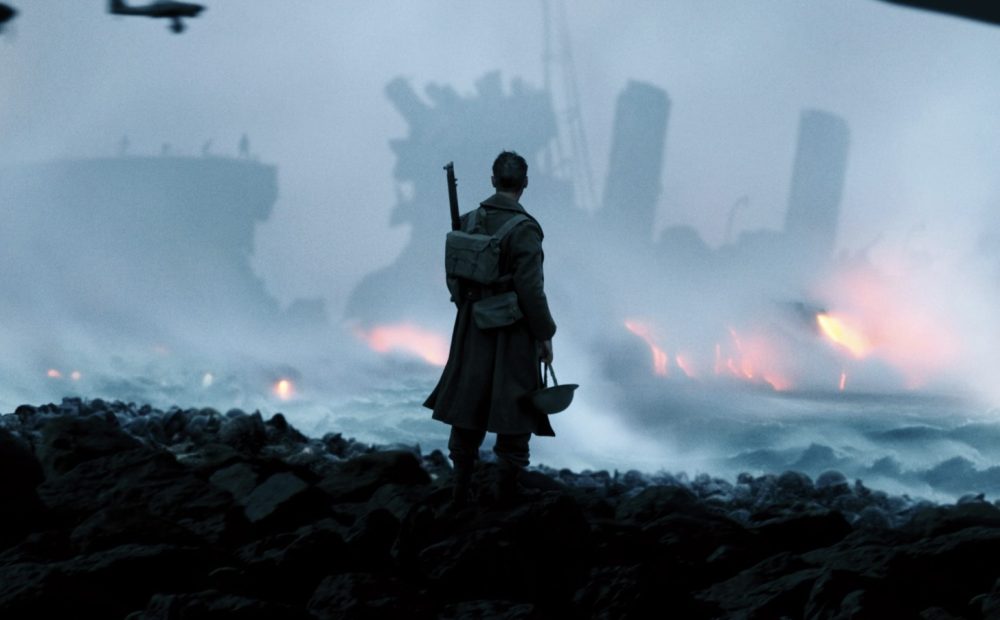
No introduction, no background setup, no tedious exposition – Nolan immediately plunges us into a gripping narrative accompanied by a tense musical backdrop. This was Dunkirk, a story centered on the British evacuation of a French coastal city in the wake of a devastating defeat.
To begin, the film is incredibly well-paced. Clocking in at 106 minutes, it moves at a breakneck pace, yet it never overwhelmes. Given the film’s more serious tone and the sparse dialogue, which could be slightly jarring at times, its brisk pacing eradicated any hint of boredum.
As expected from a Nolan movie, the film does not follow a linear narrative. Nolan plays with time, interweaving the stories of three sets of characters on three different warfronts during three distinct timeframes. Although initially disorienting, once the timeline could be pieced together, it resulted in a satisfying set of payoffs, especially as everything converged into a singular timeline towards the end.
The set pieces were nothing short of breathtaking, with real ships and planes used to immerse the audience in a palpable and authentic experience, enhancing the film’s overall realism. The cinematography perfectly complemented these set pieces, with aerial sequences – notably those following Tom Hardy’s character over the North Sea – standing out as a highlight. The camera work during the dogfighting scenes was stunning, allowing shots to linger without excessive cuts, enabling the audience to fully appreciate the spectacle.
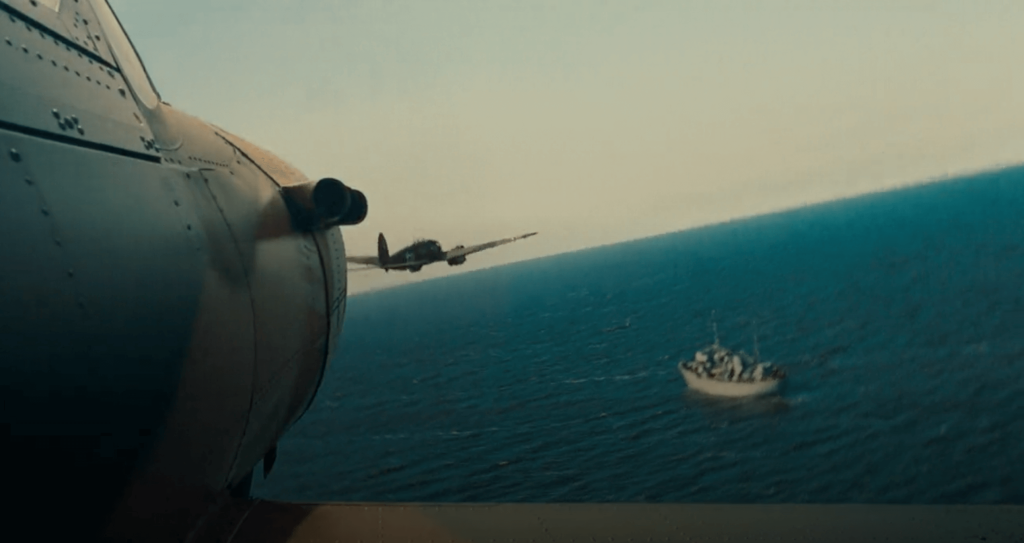
Through this, Nolan also emphasized the significance of aerial warfare in World War II and the critical role of air superiority, grounding the film in historical accuracy. Moreover, the film unflinchingly portrayed the brutality of war, depicting troop mentality, shell shock, and the erosion of hope, offering a stark reminder of the devastating impact of armed conflict.
As the movie prioritized the event itself over its characters, there was a significant detachment felt for the protagonists of the film. Emotional ties to the characters were lacking, and little to no emotional bonds were formed between us and the protagonists. Although this was most probably an intentional directorial choice, it made it challenging to connect with the characters on any level, diminishing the immersion it had previously built.
However, Cillian Murphy and, surprisingly, Harry Styles delivered solid performances, standing out as some of the film’s highlights. Murphy’s portrayal of a shell-shocked soldier and Styles’ depiction of a soldier attempting to escape the battlefield were both convincing and compelling, eliciting empathy from the audience. However, the lead character, Tommy (Fionn Whitehead), felt more like a side piece to the story.
Hans Zimmer’s score wasn’t bombastic and uplifting; instead, it evoked a sense of dread and escalating panic. The constant tension and suspense created by the soundtrack heightened the film’s overall intensity. Not to mention the whining sound of the dive bombers – designed to instill fear – adding to the tension, keeping us thoroughly engaged.
Despite its many strengths, the film’s conclusion fell slightly short of expectations. Given Nolan’s track record, one might have anticipated a more emotionally resonant ending. While well-executed, it felt somewhat brief and rushed for Nolan’s high standards. Perhaps an additional five minutes of runtime could have enhanced the film, although it’s worth considering that it might have diluted the gravitas of Churchill’s “We Shall Fight on the Beaches” speech recited by Tommy.